
 By
By 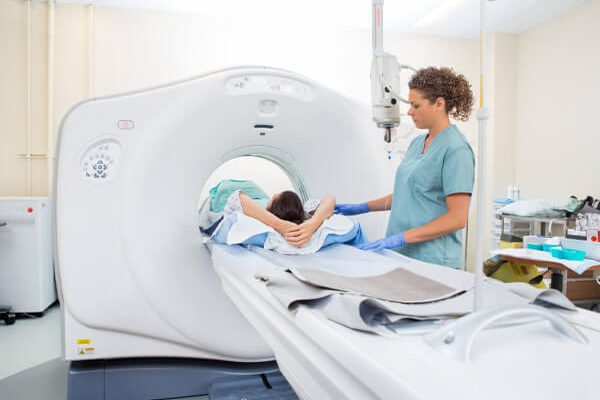
Chronic back pain is one of the most common reasons people seek medical care, and it is also one of the most frequently over-investigated and under-investigated conditions in equal measure. Some patients spend years managing pain without ever getting the imaging that would identify the underlying cause. Others undergo multiple scans early, receive results that do not explain their symptoms, and remain stuck in the same diagnostic uncertainty.
Understanding when MRI is actually the right tool for chronic back pain, and what type of MRI is most likely to produce useful diagnostic information, helps patients advocate more effectively for themselves and helps the healthcare process move in a more productive direction.
Why MRI Is Not Always the First Step
Clinical guidelines for back pain generally recommend against immediate imaging for most acute or sub-acute cases, precisely because the majority resolve within six to twelve weeks with conservative management, and early imaging often reveals age-related findings that are present in many pain-free people as well, creating a risk of unnecessary treatment aimed at incidental findings rather than the actual source of pain.
For chronic back pain, the calculus changes. When pain has persisted beyond twelve weeks, has not responded adequately to conservative treatment, or when specific features of the pain pattern suggest a structural cause that needs to be identified before treatment can be properly directed, MRI becomes a genuinely valuable tool rather than a reflexive early step.
Clinical Indicators That Point Toward MRI
Several features of a patient’s presentation make MRI a clinically appropriate next step. Leg pain accompanying the back pain, particularly pain that radiates below the knee in a specific dermatomal pattern, suggests nerve root involvement that MRI can evaluate directly. Progressive neurological symptoms, including weakness, numbness, or changes in bladder or bowel function, are red flags that warrant urgent imaging. Back pain that is consistently worse at rest or at night, or that is associated with unexplained weight loss or fever, warrants imaging to rule out serious pathology that conservative management would not address.
For patients who have had appropriate conservative treatment including physical therapy and medication without meaningful improvement, MRI provides the structural picture that helps determine whether a different approach, such as targeted injections, procedural intervention, or surgical referral, is warranted.
Why the Type of MRI Matters for Back Pain
The standard approach to back pain MRI places the patient flat on their back for the duration of the scan. For many structural findings this is entirely adequate. For back pain that is specifically positional, meaning pain that is noticeably worse when standing, walking, or sitting upright and relieved when lying down, scanning in the supine position removes the very load that is producing the symptoms. The spine in a decompressed, lying-flat state may look substantially different from the same spine under the axial load of the patient’s own body weight. Upright MRI center in Deerfield performs weight-bearing scans that capture spinal anatomy in the loaded positions where symptoms actually occur, which frequently reveals findings that are absent or understated on conventional supine imaging.
This is particularly relevant for conditions like lumbar stenosis, where canal narrowing is often dynamic and increases under axial load, and for spondylolisthesis, where vertebral slippage can progress meaningfully when the patient is upright compared to lying flat. A supine MRI of either condition may understate the severity of the finding and lead to a conservative treatment plan that does not match the functional reality of the patient’s symptoms.
When Standard MRI Results Do Not Match Symptoms
One of the most common frustrations in chronic back pain management is the disconnect between imaging results and the patient’s experience. A scan that appears normal or shows only mild degenerative changes does not necessarily mean nothing is wrong. It may mean the scan was performed in a position that does not capture the structure of interest in its symptomatic state.
Patients who have had a conventional MRI that did not provide a satisfying explanation for their pain, particularly when the pain has a clear positional component, are good candidates for a weight-bearing scan as a next step. The additional information it provides either confirms the previous assessment or identifies findings that were position-dependent and therefore invisible on a supine scan.
What to Discuss With Your Doctor Before Requesting an MRI
Before pursuing MRI for chronic back pain, it is worth having a clear conversation with your physician about what the scan is expected to answer and how the results will influence the treatment plan. An MRI ordered without a specific clinical question tends to produce findings that are difficult to act on. An MRI ordered because a specific diagnosis needs to be confirmed or ruled out, and because the result will direct a specific next step, is a more productive use of the technology.
If your pain pattern changes significantly with position, mention this explicitly and ask whether a weight-bearing or positional MRI would be more appropriate for your situation than a standard supine scan. Many physicians are familiar with the limitations of supine imaging for positional conditions but will not raise the alternative unless prompted.
Conclusion
MRI is a genuinely useful diagnostic tool for chronic back pain when it is applied at the right point in the clinical process and when the type of scan matches the nature of the patient’s symptoms. A standard supine MRI answers many clinical questions effectively. For positional back pain, where the problem only manifests under load, it may not be the most informative option available.
If you have chronic back pain that worsens when upright and improves when lying down, understanding the reasons to choose upright MRI for back pain is a practical step that can clarify whether a weight-bearing scan would give your physician diagnostic information that a conventional scan has not.







Comments